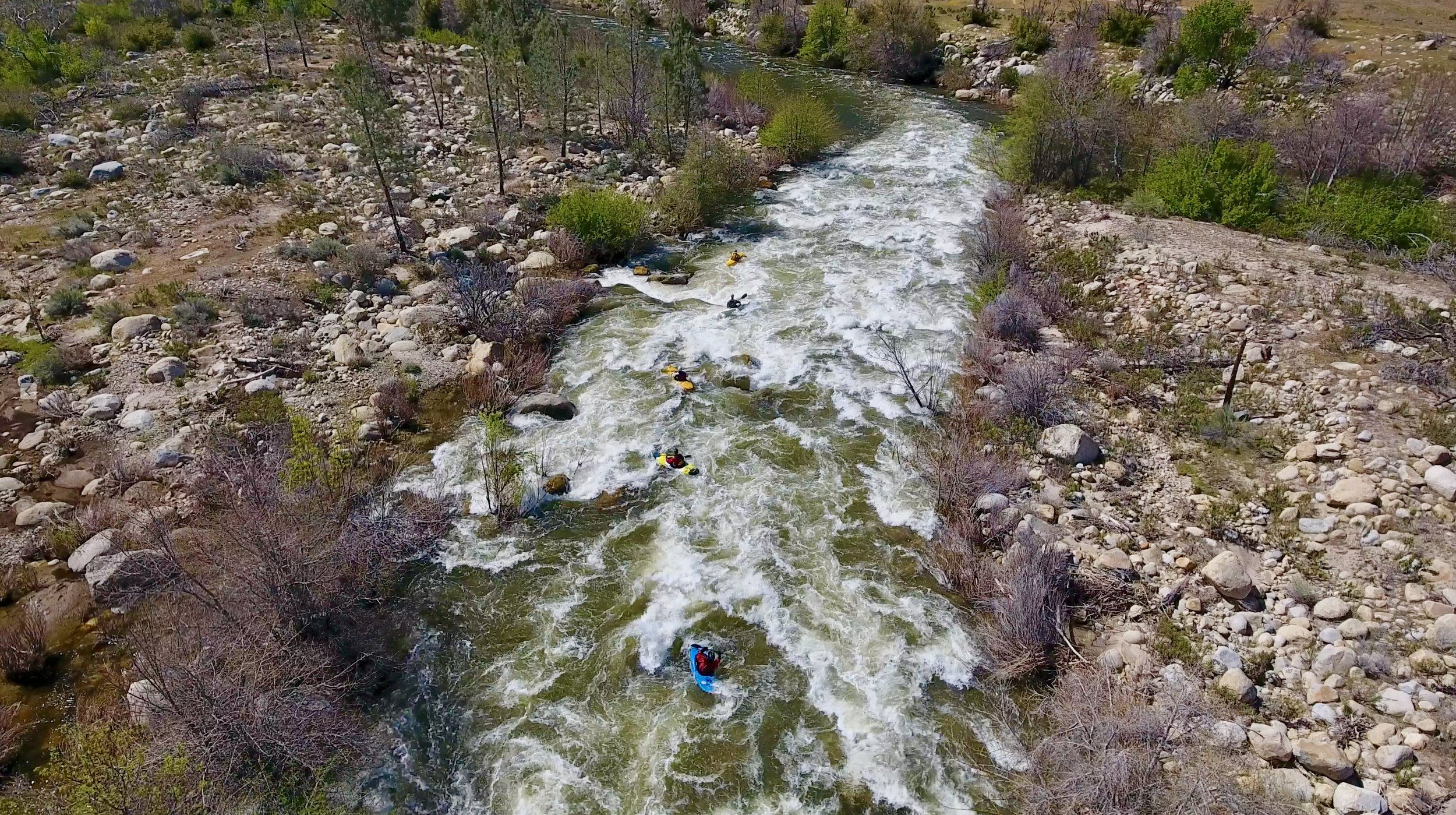
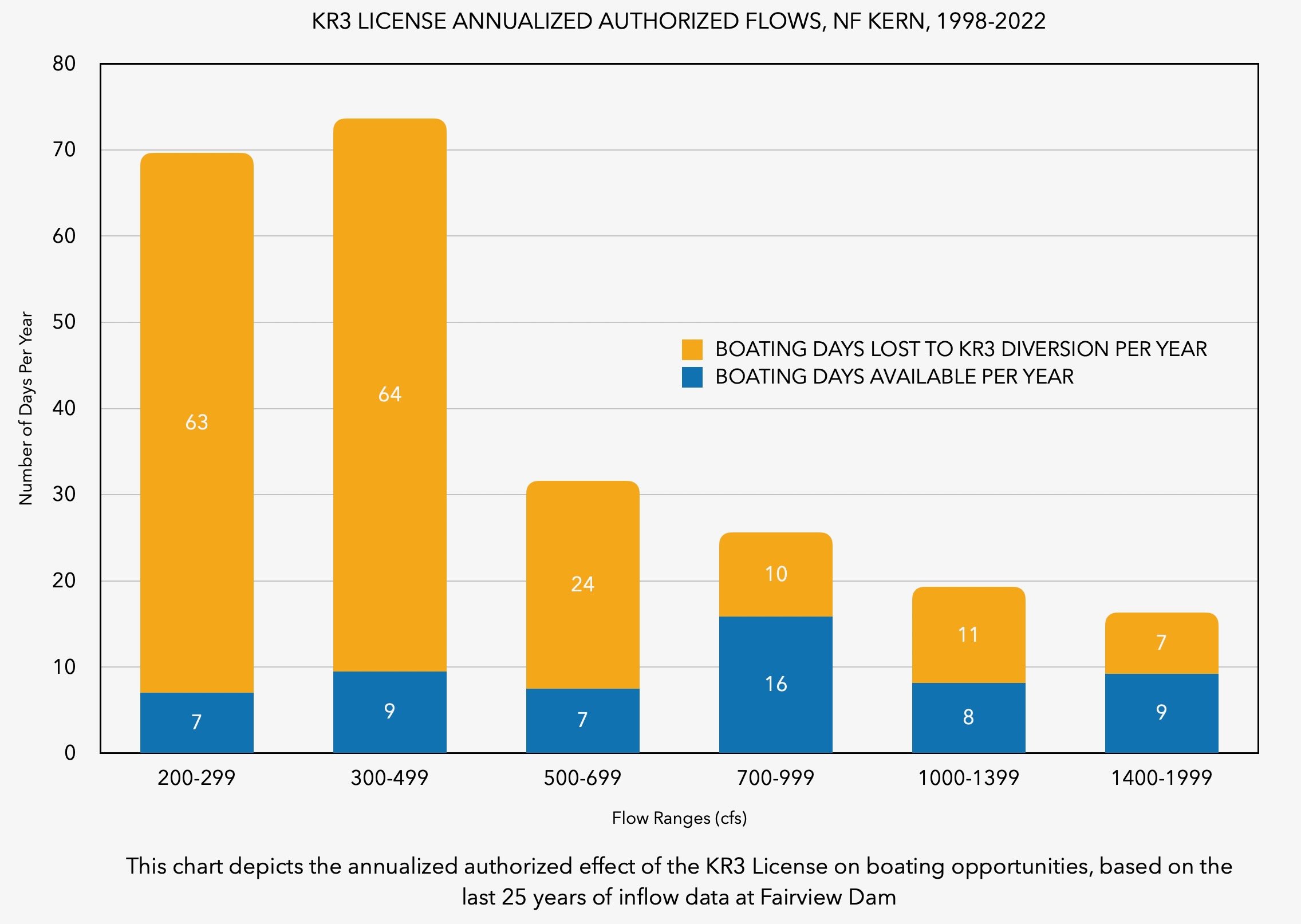
The present license only considers project effects on boating at flows over 700 cfs from April through July. The KRB request contended that the assumptions underlying that condition were outdated and failed to capture the project’s full effect on whitewater boating. Boating the NF Kern is enjoyable below 700 cfs and there are vastly more days when flows are below 700 cfs than above. The project’s effects on recreation, and its obligation to provide mitigation, is much, much greater than Edison proposes.
As KRB argued in its comments to FERC,
Three elements have conspired to increase public interest in boating at lower flows.
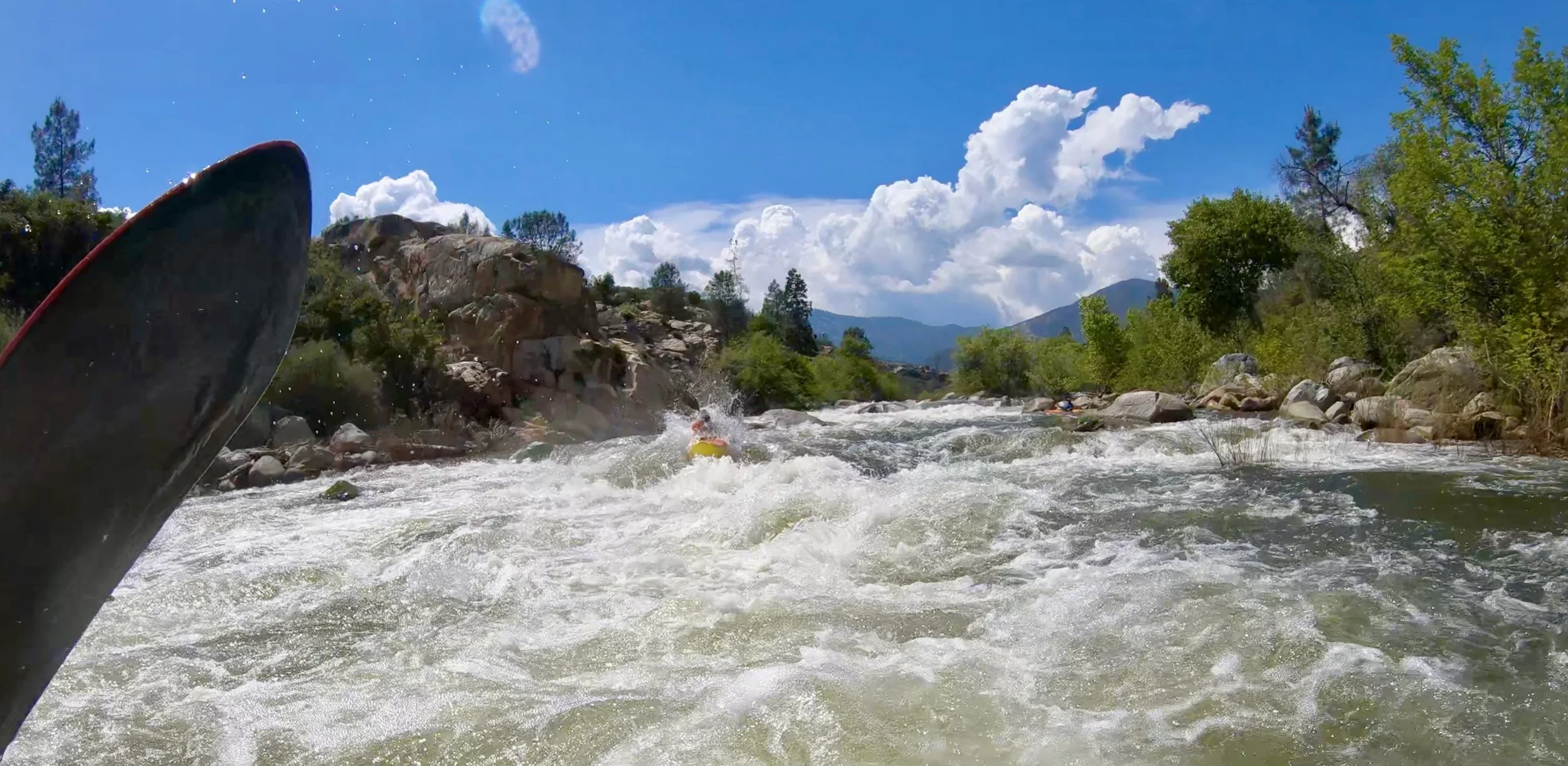
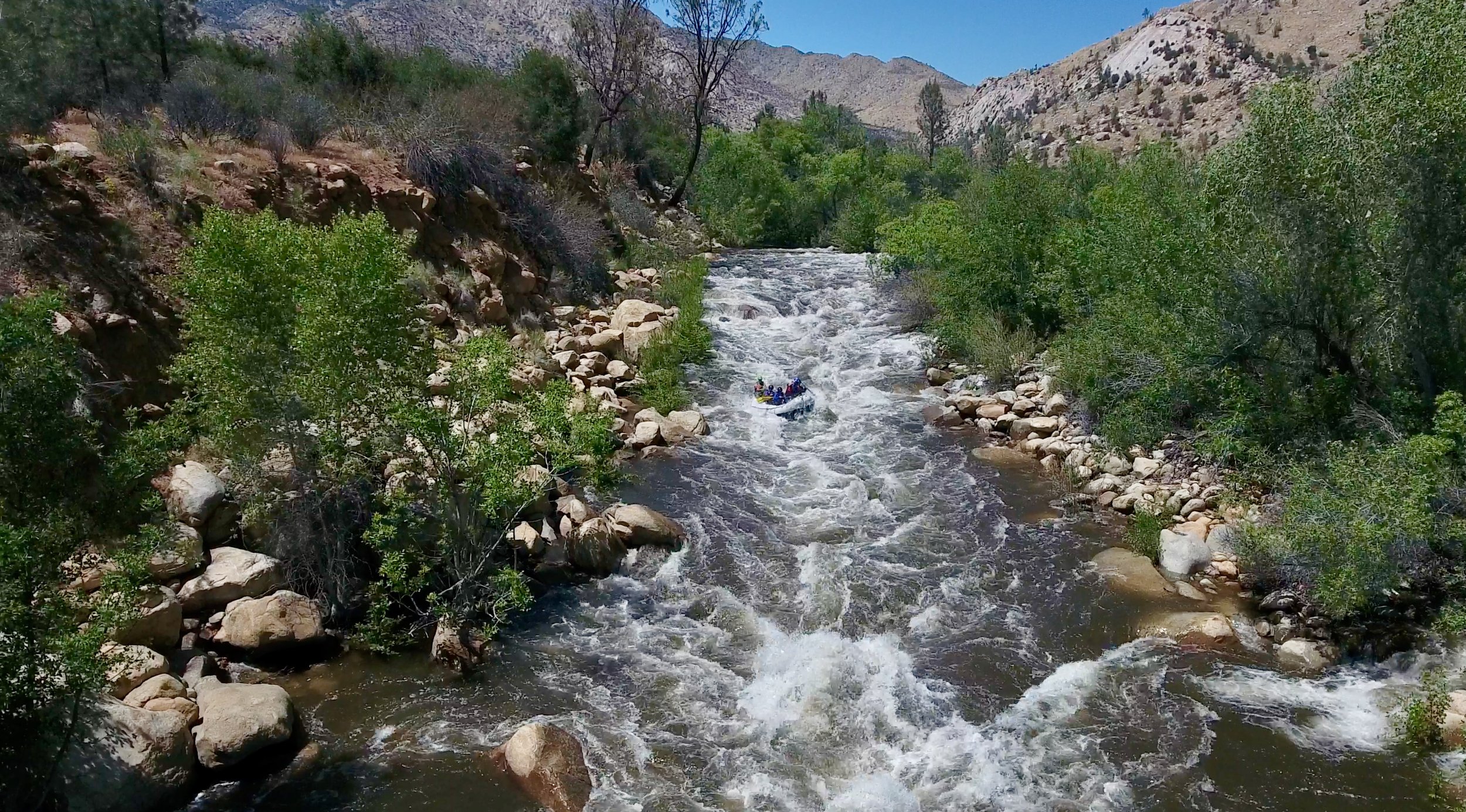
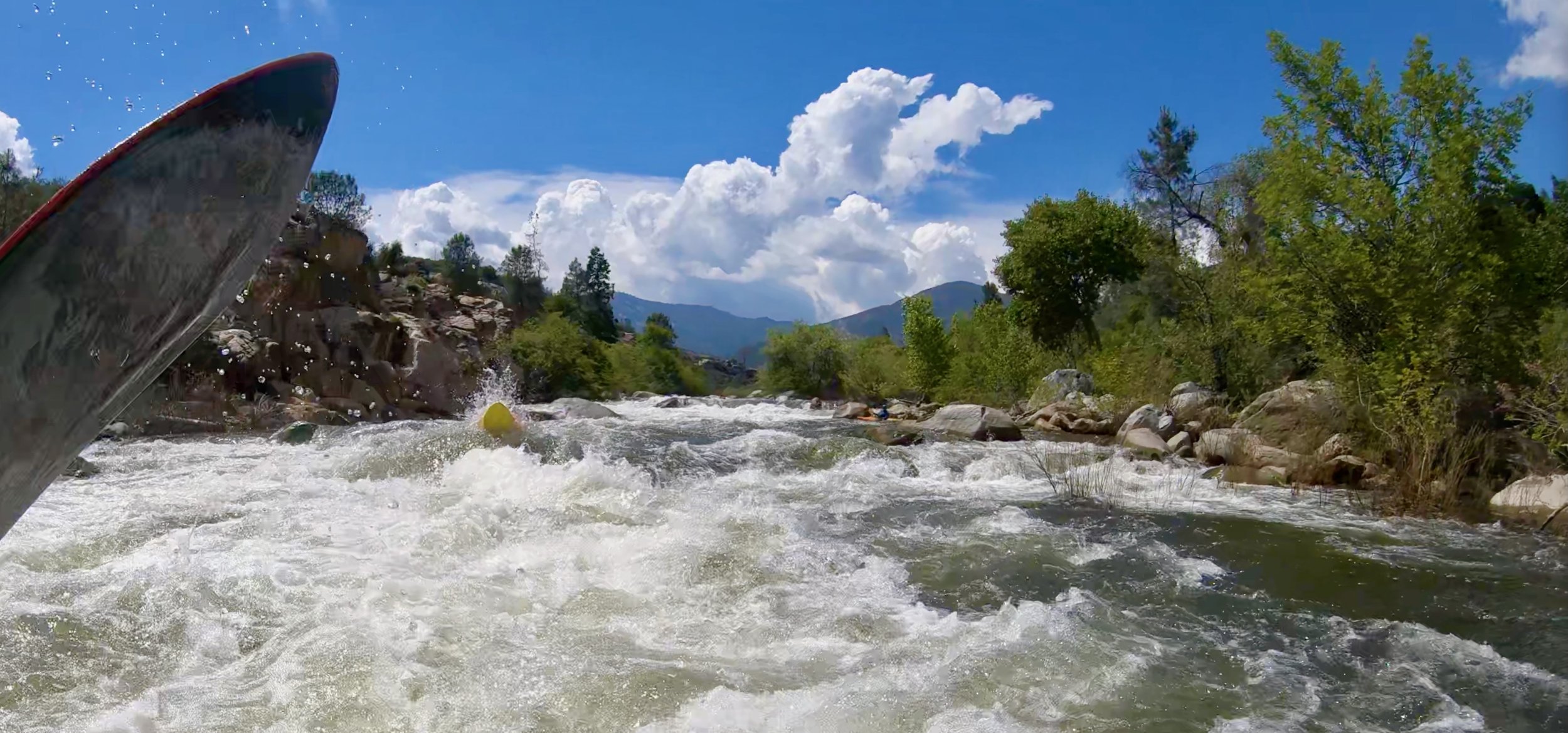
First is the influence of “creeking.” Creek boating began on creeks — low water, sufficiently steep and channelized tributaries — and its popularity has expanded to low water, sufficiently steep and channelized rivers. The PAD concedes that the makeup of “Segment 1” — the first 7-mile stretch below Fairview Dam, including the popular Fairview, Chamise, and upper Ant Canyon runs — is more channelized and sports a higher gradient than Segment 2, making it more suitable for low water runs.
Second, boat designs have changed dramatically since 1994. Boat ergonomics have increased boater comfort while increased rocker, progressive rocker, and neo-displacement hull designs have made boats and boaters more comfortable with tight maneuvers and wet boulder engagements — to the point such experiences are pleasant and challenging features of whitewater recreation.
Third, boater skills have changed. In 1994, the “boof” stroke had yet to be born of its parent the “ski jump.” The boof stroke enables boaters to keep the nose of the boat from submerging on steep drops. There are classes dedicated solely to teaching the boof stroke, and it is used to boater advantage on downspouts of water, wet boulder faces, or combinations of the two. (KRB PAD Comments at p. 58.)
KRB contended that boaters able to negotiate the dewatered reach of the NFKR generally enjoy flows starting around 200 cfs, and the more water from there, the better. Indeed, boater advocates in the last relicensing all argued for the provision of flows below 700 cfs. American Whitewater (pre-John Gangemi), Kern River Outfitters (Chuck Richards), Kern River Valley Council (Garry Valle & Katherine Edmondson), and even Sierra South (Tom Moore), all fought for flows down to 200 to 300 cfs.
It comes as no surprise that Edison would vigorously oppose KRB’s suggested line of inquiry. At the following Recreational TWG meeting, which took place on February 10, 2021, Edison pulled out the 1994 boating study, which underpins the present license, and asked the participants whether its conclusions were still valid. Curiously, this meeting included not only Tom and Evan Moore, who since the last relicensing had become close Edison allies, but also a bunch of their friends and present and former employees who had not attended a meeting before and did not attend another one, including: Bryan Batdorf, Jonathan Cizmar, Katherine Edmundson, James Sparks, Steve Merrow, and Tom Gelder. (See Edison PAD Appendix at .pdf pp. 27-29.)
All of these Sierra Southers agreed with Edison’s contention that the 1994 study remained accurate, even though as noted above creeking, the boof, and significant boat rocker had not yet been born. KRB’s Peter Wiechers eloquently maintained against this stacked house that flows down to 200 cfs were enjoyable and worthy of protection — something important is lost when the project denies the public these flows, especially when they are the only flows available in the shoulder seasons or in the runoff season of dry-to-moderate years to all of Southern California. Underlining Peter’s point, not six weeks later KRB saw a Sierra South guide and student enthusiastically preparing for their third lap on Chamise — they were having a great time on a sunny, late-winter day. The flow that day? 220 cfs. Much less than the 550 cfs Tom & Evan Moore and their friends had told the TWG group was needed to enjoy that run.
Many of you were at the December 01, 2021 American Whitewater “talk about the Kern” meeting. There, Tom and Evan pleaded against us requesting on-water studies that could establish that boating days are lost at flows below 700 cfs, even as Evan conceded we’d see him up river whenever flows were over 200 cfs. According to Tom and Evan, Edison had offered to secure permitting for a whitewater park if boaters did not request on-water flow studies to accurately capture project effects. Essentially, the Moores were asking the group to trade flows on the Upper Kern for permits. It wasn’t the first time: the Moores had approached KRB through Katherine Edmundson months earlier with the same proposed deal. And what a great deal for Edison! Business-as-usual in exchange for the price of the only studies that could upset the status quo.
No one at that meeting or in comments to FERC took the Moores up on Edison’s offer. Money can be raised to hire expert consultants and secure permits at any time. Indeed, the Moores stand to reap a financial windfall through increased playboat sales and playboating lessons should such a park get built; they are more than capable of spearheading a fundraising campaign and providing a sizable chunk of the necessary funds given what they stand to personally benefit.. By contrast, this relicensing proceeding is our community’s only chance to secure boatable flows from Fairview through Cables for the next 40 years. As Dennis Rushing wrote, “We have 20 miles of what is basically a whitewater park for river running.” (FERC No. 20220120-5104.) We need to put water in it for us and future generations.
Having failed to convince the Kern boating community to abandon an on-water flow study, Edison retreated to the defense of its consultant John Gangemi, formerly of American Whitewater, who is trying to hold the line at cheap flow surveys that are easily manipulable by Edison’s consultants and allies. KRB continues to believe the North Fork Kern is important enough to deserve the most accurate methodology for determining boatability: a Level 3 on-water study: “Some rivers have extensive recreation use that is clearly flow-dependent and affected by project operations; here more intensive and detailed efforts are necessary.” (At p. 9.) This is Southern California’s river, not just Kernville’s, and it is the key to expanding the boating community into the 25 million residents of the region. We will continue advocating for such a study — a mission made much more difficult with the opposition of Edison’s local allies.